Venture Robot Solutions (VRS) is a Swiss deeptech company developing service robots for hospitals, rehabilitation centres, and care facilities. These robots autonomously handle repetitive, non-clinical tasks, such as transporting medical supplies, linen, and meals. By reducing the time staff spend on logistics, they improve operational efficiency and allow healthcare professionals to focus more on patients and provide better care.
The integrated system combines a modular mobile base, Stereolabs 3D vision, edge computing and VRS’s proprietary CareOS platform, including deployment, monitoring, and workflow integration.
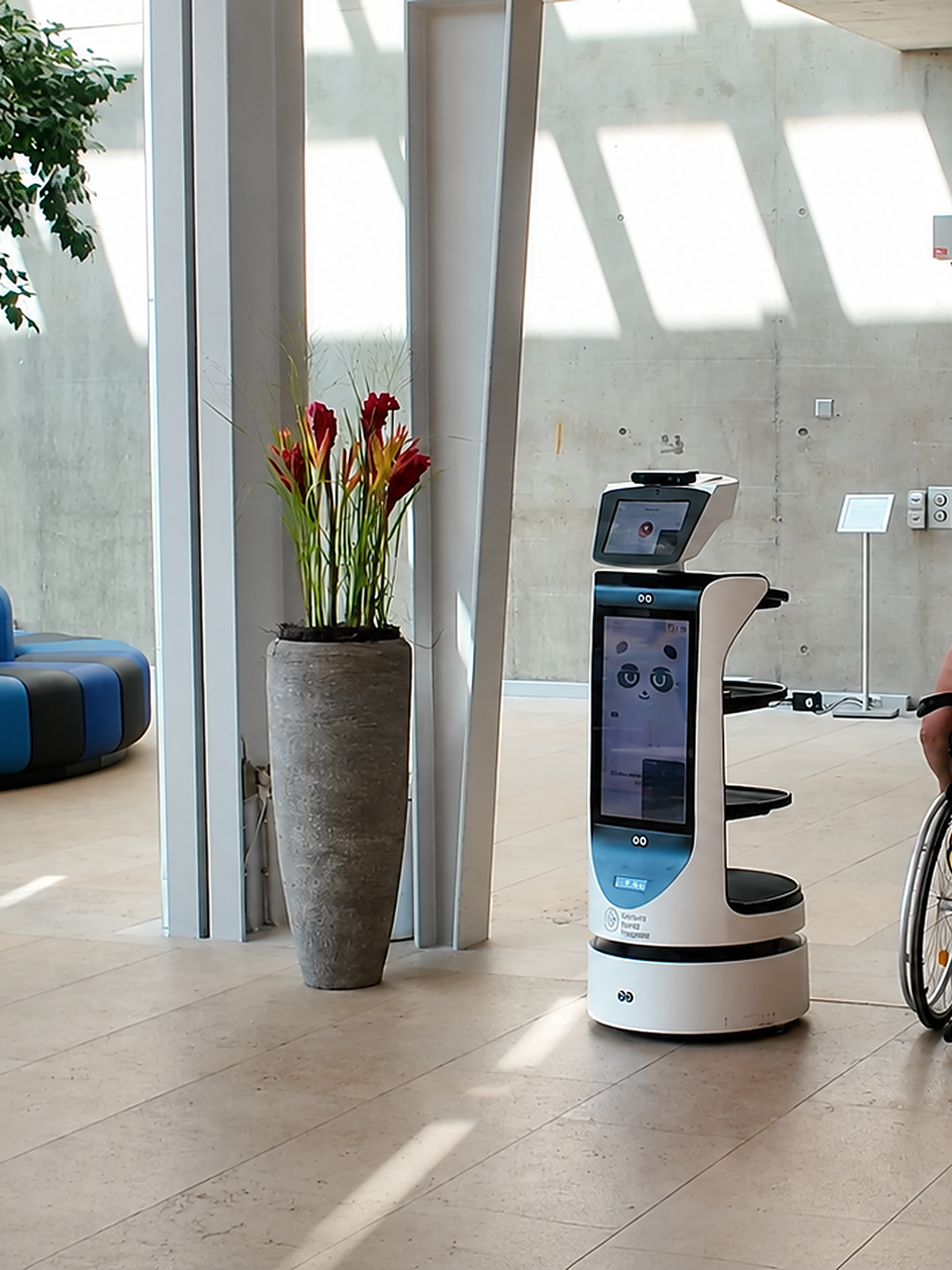
Figure: VRS field validation at the Swiss Paraplegic Centre in Nottwil, Switzerland.
The Challenge: Autonomy is not the Same as Usefulness
Healthcare environments are difficult for robots because they are built around people, not machines. Staff, patients, residents, visitors, wheelchairs, carts, and equipment continuously share corridors, lifts, doorways, and common areas. Routes change, people stop unexpectedly and the same mission can unfold differently every time.
Conventional navigation can move a robot from one point to another. It does not by itself make the robot predictable, trusted, or useful inside a real workflow. To operate alongside care teams, the system needs to understand where people are in three-dimensional space, how the surrounding situation is changing and when it should continue, slow down, yield, wait, or stop.
This is also an adoption problem. A technically autonomous robot creates little value if staff do not understand its behaviour, if operators cannot reconstruct incidents or if the machine does not fit the routines of the site. VRS therefore treats perception, behaviour and deployment as one engineering problem.
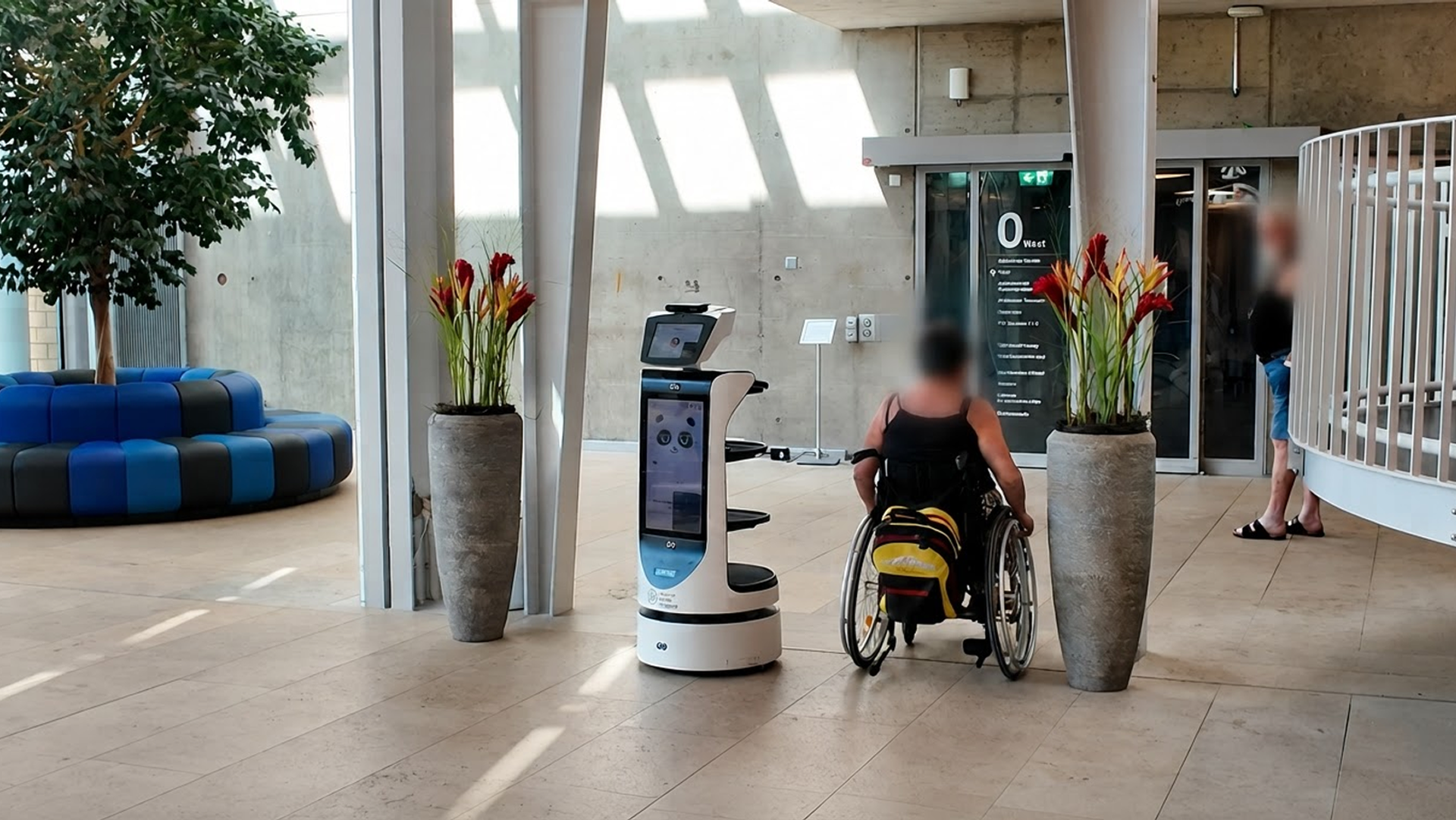
Figure: Human-centred validation: the robot operates in spaces shared with patients, visitors, staff, and mobility aids.
Stereolabs 3D Vision as the Spatial Foundation
The Stereolabs ZED 2i is the main 3D vision sensor in the current VRS perception stack. Its stereo depth output gives the system a dense spatial representation of the scene and supports the localisation and tracking of people beyond the flat obstacle maps typically used for mobile navigation.
VRS combines this 3D information with robot odometry, maps, native navigation state, commanded motion, and mission context. The result is not simply a camera feed. It is a structured world state that CareOS can use to interpret a human-robot encounter and select an appropriate response.
This strengthens VRS's deeptech positioning in a very concrete way. Stereolabs provides reliable spatial context; VRS contributes the fusion, behavioural control, hardware abstraction and deployment intelligence that convert that context into repeatable operation. The camera is therefore a core sensing component inside a broader proprietary robotics system.
Perception is designed to run on-device. For evaluation and replay, VRS primarily retains structured operational telemetry and depth-derived signals rather than raw video as the default, supporting a privacy-conscious approach for sensitive human environments.
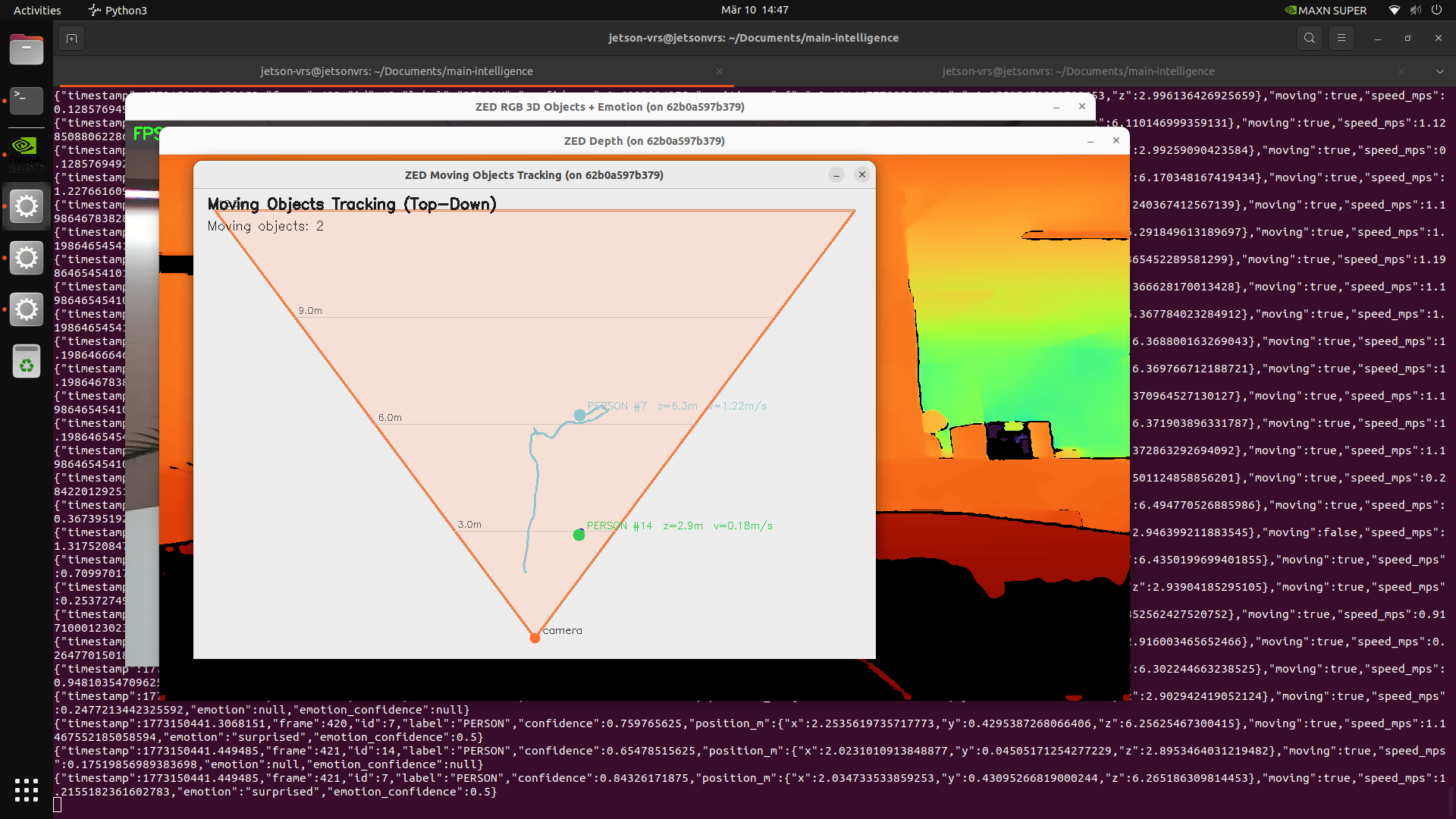
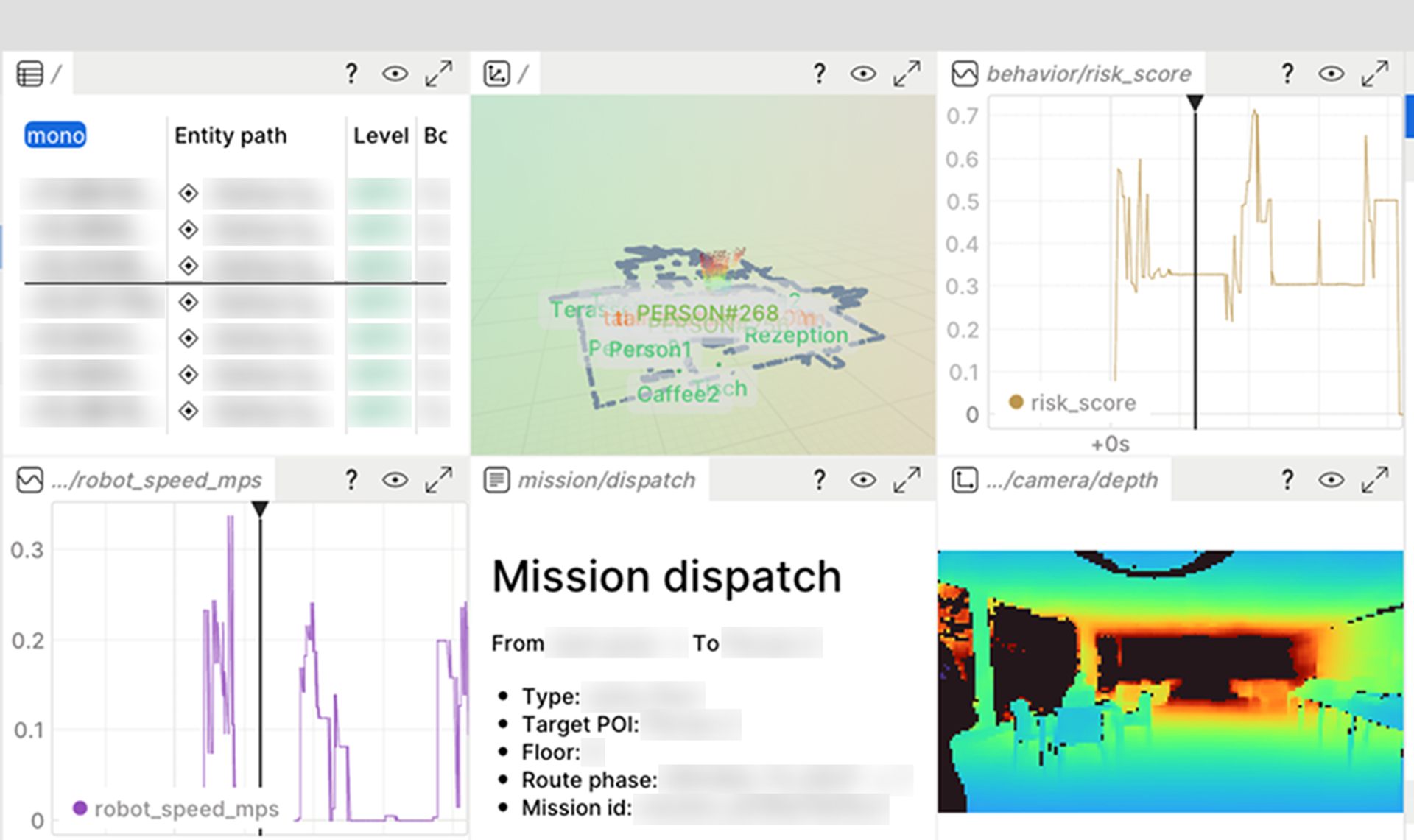
Figure: Development view of the Stereolabs-powered perception pipeline: depth, person localisation, and movement tracking.
From Perception to Explainable Behaviour
CareOS uses a deterministic, fail-closed Behaviour Engine to decide when the robot should proceed, slow down, yield, wait or stop. Each intervention includes a reason code, making decisions traceable and easier to audit.
By synchronising perception, navigation, behaviour, and mission data, VRS can reconstruct incidents, resolve defects, and validate improvements. This continuous learning loop enables validated behaviours and deployment knowledge to be reused across compatible robot platforms.
Figure: Mission replay aligns the Stereolabs depth stream with behaviour risk scores, robot speed, maps, and mission events.
Validated in Swiss Care Environments
VRS tested its system at Haus Tabea in Horgen and the Swiss Paraplegic Centre in Nottwil.
- 128 recorded missions: Across both pilots, VRS ran 128 recorded missions over 2440 metres.
- Safety: No person collisions were recorded at either site, with no contact with a wheelchair reported at the Swiss Paraplegic Centre.
- Continuous improvement: Issues were reconstructed, corrected and redeployed, supported by 138 product commits between the pilots.
- Operational performance: The second deployment showed directional improvements in speed, hesitation, and mission completion.
These deployments demonstrated how 3D perception and explainable control can support safer, more measurable robot operations in real care environments.
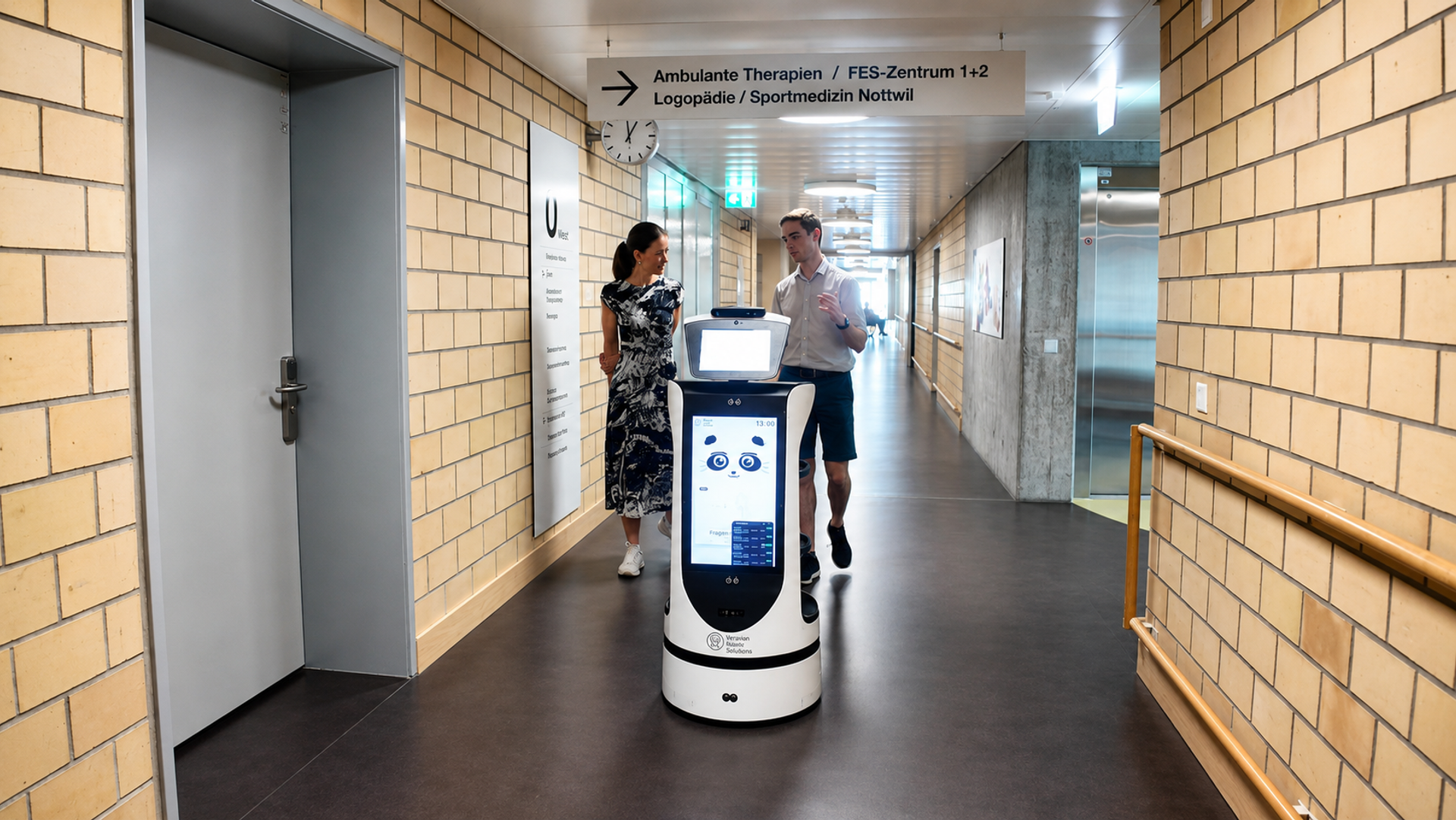
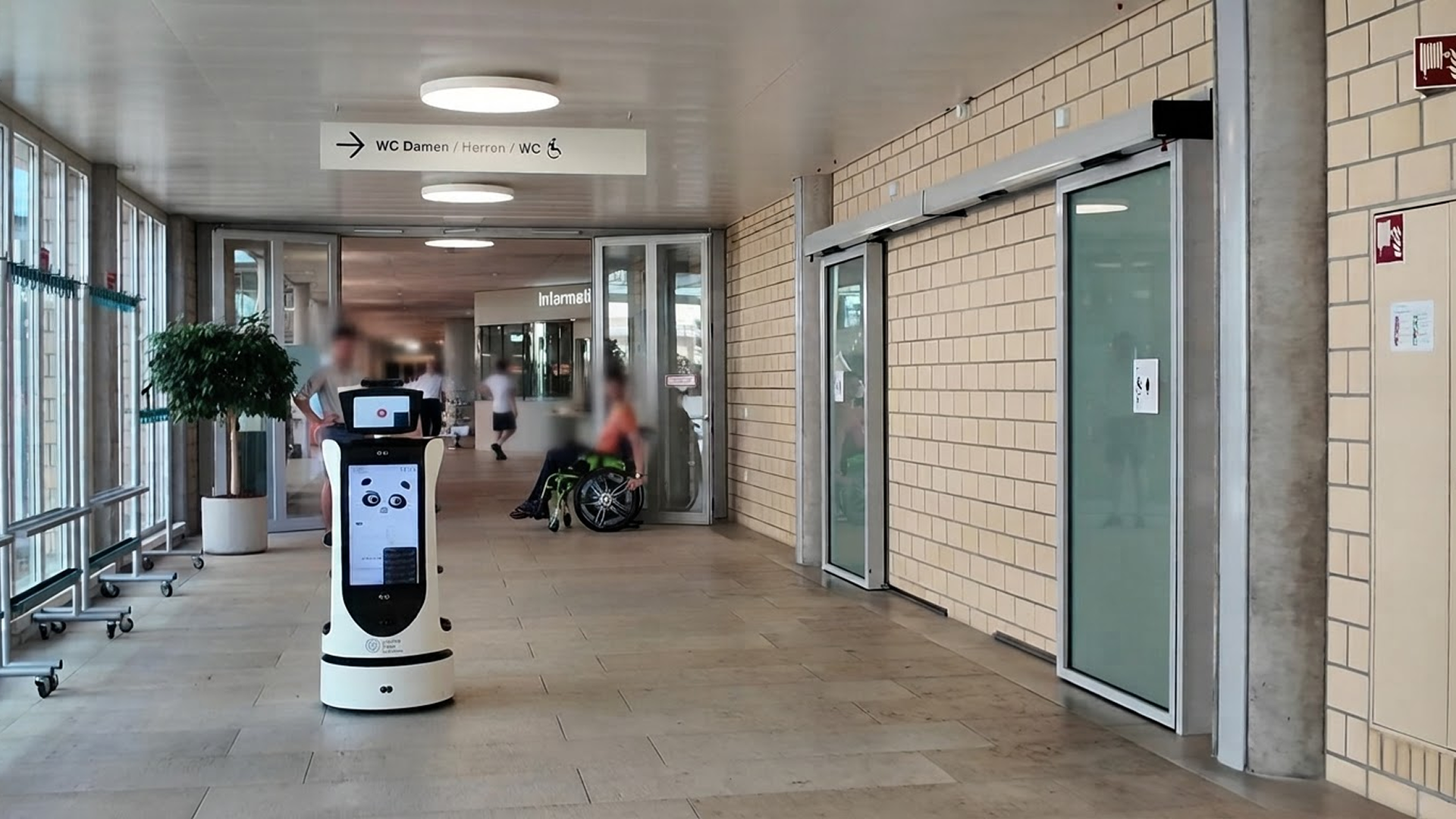
Figure: The VRS system operating in a shared Swiss healthcare corridor alongside a wheelchair user and staff.
Turning Technical Capability into Operational Value
VRS targets repetitive tasks such as internal deliveries, supply runs, guidance, and interaction activities. Each deployment is configured around the facility’s workflows and operational needs.
The company currently estimates that each robot can return approximately 40 staff hours per month, with a target of 90 hours for mature deployments. These figures represent released staff capacity, not direct cash savings.
VRS is now developing a more capable robotic platform with enhanced edge computing and modular payloads. Stereolabs 3D vision will remain central to its perception architecture, while CareOS provides the explainable behaviour and deployment intelligence needed to scale across care environments.
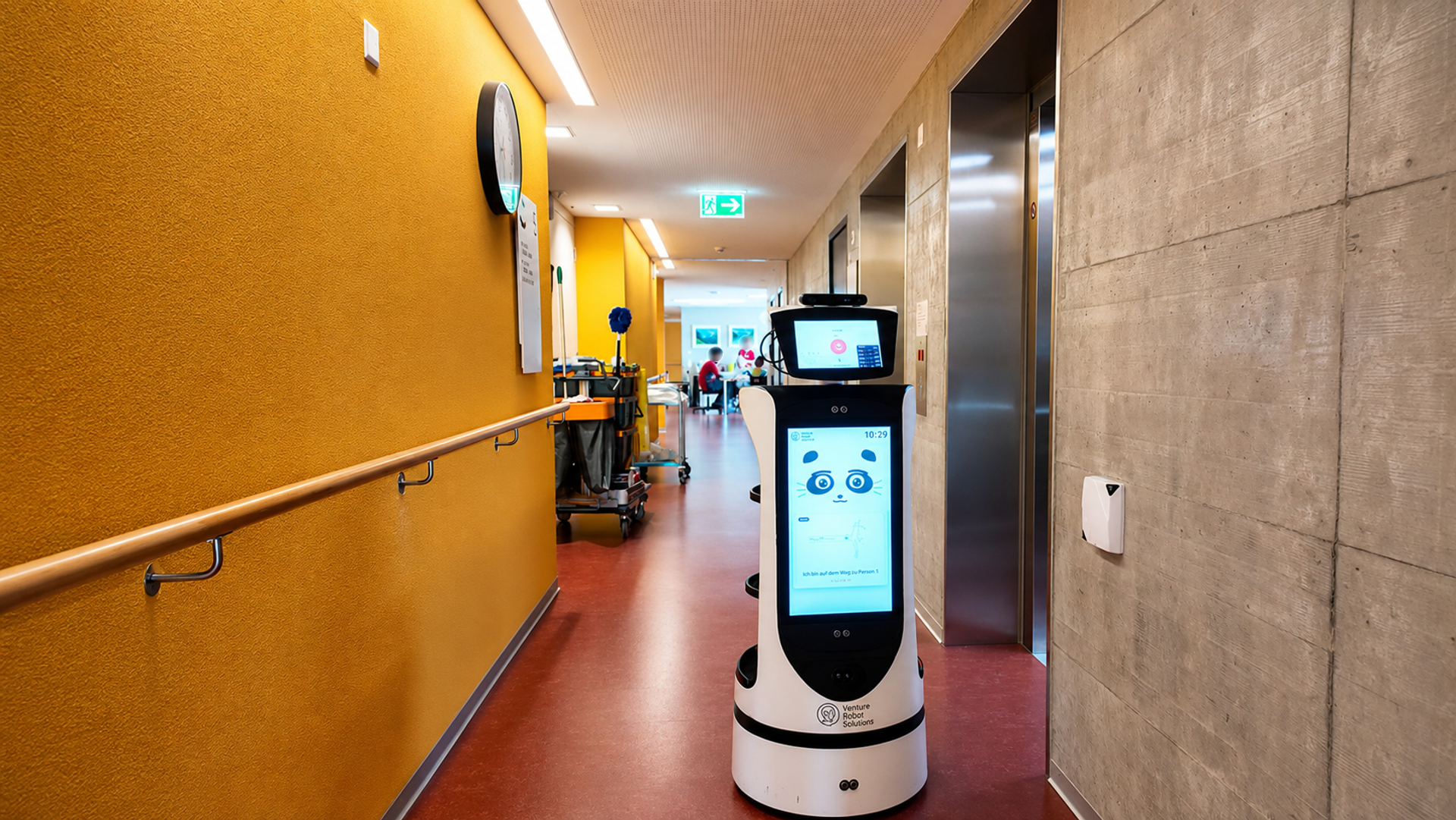
Figure: A VRS robot operating near lifts during field validation at the Swiss Paraplegic Centre.
“Stereolabs gives our robots the three-dimensional context they need. CareOS turns that context into explainable behaviour, and our deployment loop turns each field mission into a better system for the next site.”
– Salim Benamira, Founder & CEO, Venture Robot Solutions